Draft preview — not published. Call (956) 303-2209 to confirm availability.

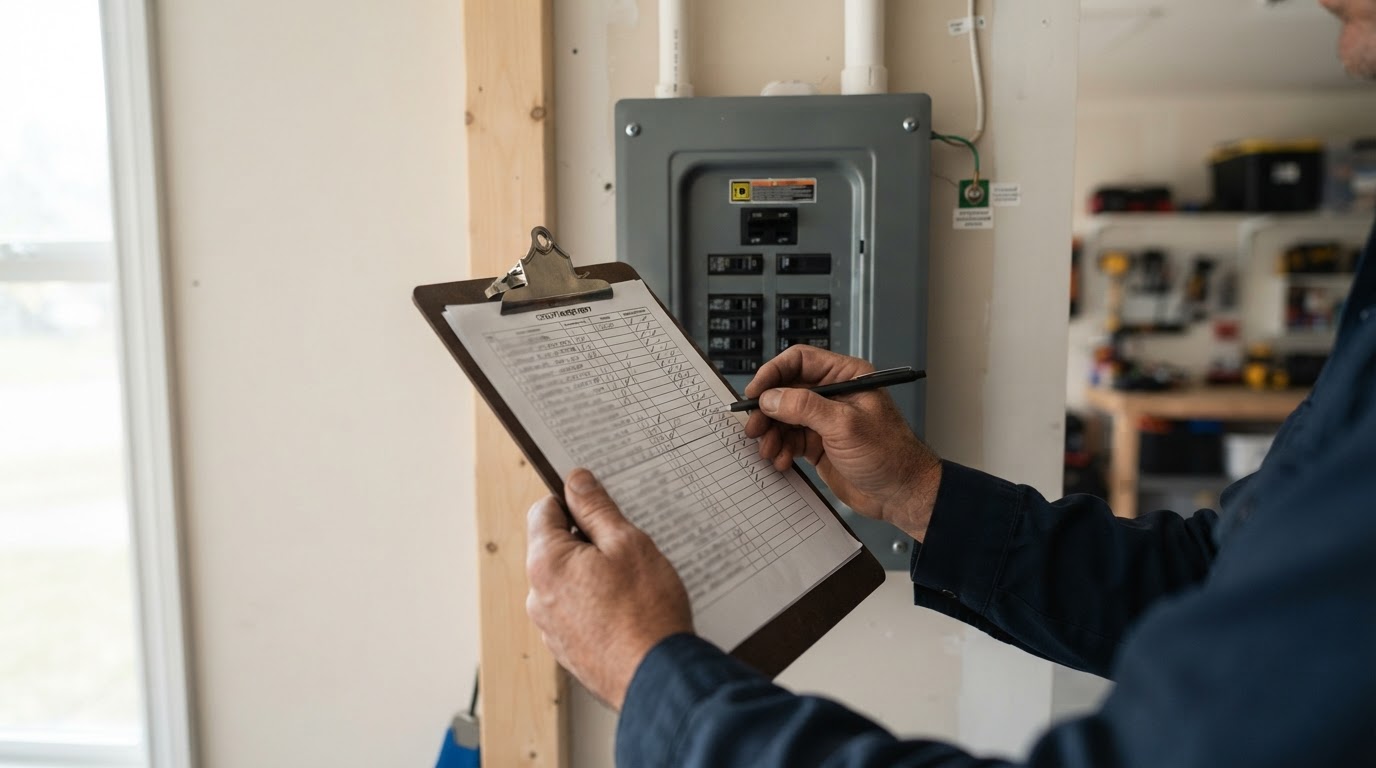
Electrician reviewing a labeled circuit directory on the closed cover of a residential load center panel on a clean garage wall under soft daylight

Edinburg, TX

Electrical Safety Assessments in Edinburg, TX

A safety assessment reviews the accessible wiring, the load center, the grounding and bonding, and the GFCI and AFCI protection — and documents the findings and priorities in writing. It is a contractor assessment, not a municipal inspection, an engineering certification, or a guarantee of concealed conditions. Tell us the property and the concern and we will follow up to confirm details and availability.

This is a project inquiry, not a confirmed booking or electrical work contract. Call to confirm urgent availability.

Request a Safety Assessment

Tell us the property and the concern. We'll follow up to confirm details and availability.

Optional text notifications

Consent is not a condition of any purchase. Carriers are not liable for delayed or undelivered messages. See our Privacy Policy and Terms & Conditions.

When should you call?

An assessment is not a city inspection

Before a remodel, before a purchase, or when an older home has not been reviewed in years are all reasons to call — and the right next step is a documented assessment of the accessible system, not a blanket rewiring by age. A contractor assessment is our on-site review to diagnose and scope; a municipal inspection is a separate step by the city's inspection authority, typically tied to a permit. They are different roles, and one does not replace the other.

If you are seeing sparks, smoke, heat, or a burning smell, that is an immediate safety issue — move away from the equipment and call 911. For anything else, a written findings report after an on-site assessment is how we keep the review honest and the corrections scoped to the real conditions.

What does the service include?

Three kinds of safety assessment

Each block below is its own kind of assessment — and each reviews the accessible system and documents what is found. Age alone does not mean every installation violates code, and a contractor assessment is not a municipal inspection.

Electrician reviewing a labeled circuit directory on the closed cover of a residential load center panel on a clean garage wall under soft daylight

Existing-property safety assessment

A whole-home electrical safety assessment reviews the accessible wiring, the load center, the branch circuits, the grounding and bonding, and the GFCI and AFCI protection at an existing property. It is a visual and appropriate functional check of what can be reached — not a guarantee of conditions concealed inside walls — and it documents what is found, not what is assumed.

We inspect the accessible wiring and devices, the load center and the circuit directory, the service entrance, and the grounding and bonding, and test GFCI and AFCI devices where present. Visible damage, incompatible breakers, and missing protection are documented as findings — the assessment is our on-site review, not a municipal inspection and not an engineering certification, and it covers what is accessible rather than what is hidden.

A documented safety assessment of the accessible system, with findings and priorities in writing — and the honest limit that concealed conditions inside walls are not guaranteed, and that a contractor assessment is not a city inspection.
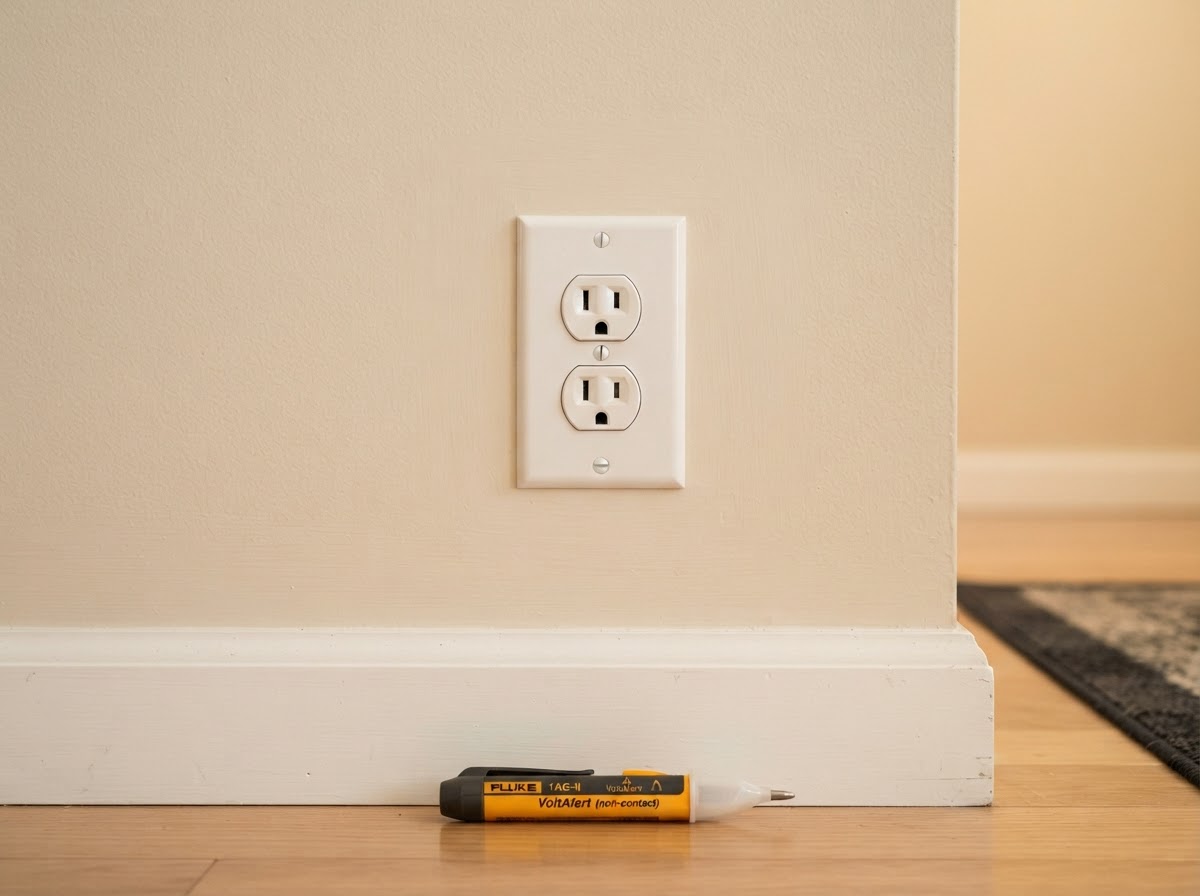
Safe accessible residential duplex receptacle being visually inspected at a clean wall with a voltage tester nearby and no exposed live conductors

Remodel and purchase concern review

Before a remodel, an addition, or a home purchase, a safety review flags the accessible issues that affect the project or the decision — a panel that is full, a branch circuit that needs protection, or wiring that does not suit the planned load. The review is scoped to the accessible system and the project, not to a blanket rewiring by age.

We review the accessible wiring, the panel capacity, the branch circuits, and the protection devices against the planned remodel or the purchase concern, and document the findings that affect the project. Age alone does not mean every installation violates code — scope and jurisdiction matter — and we scope corrections to what is actually found, not to a universal rewiring recommendation.

A remodel or purchase review scoped to the accessible system and the project, with findings tied to the planned work — and the honest limit that an older home does not automatically need complete rewiring, and that official acceptance is the authority's role.

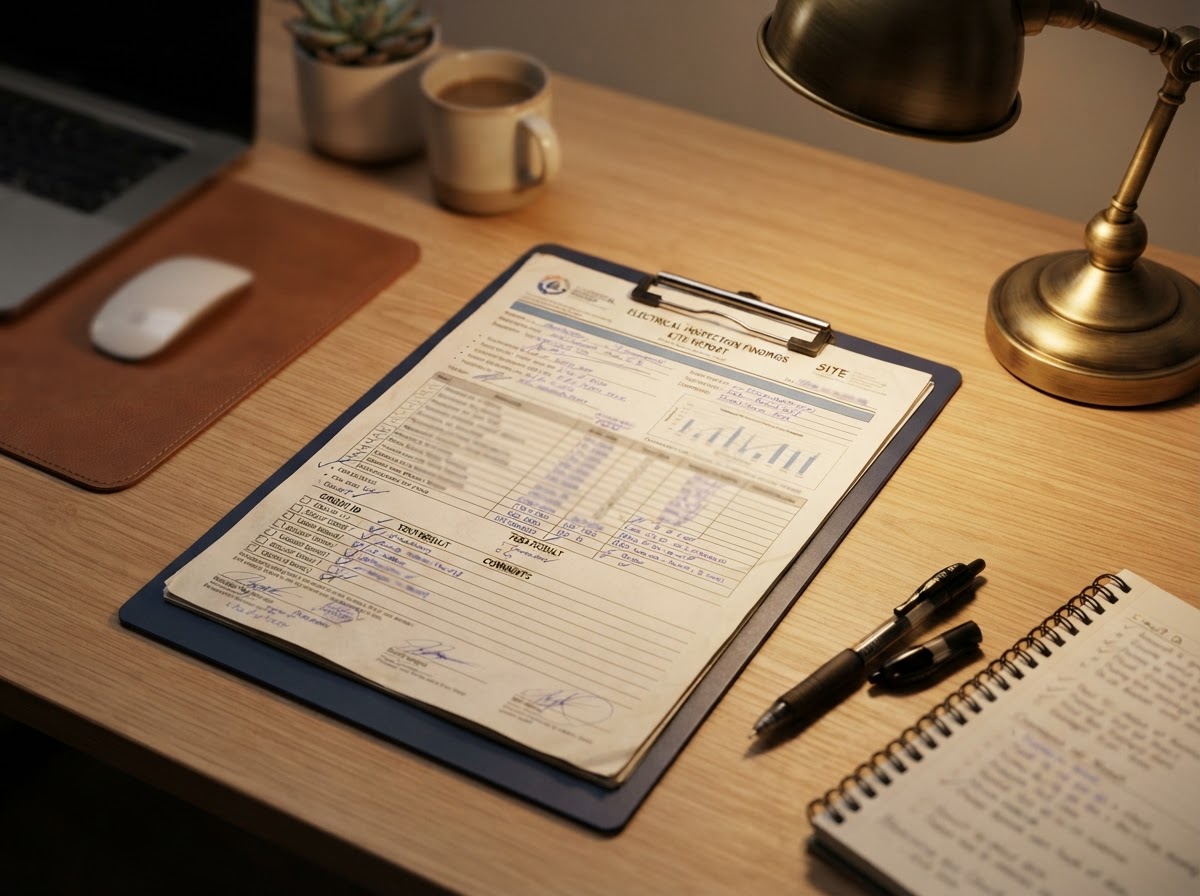
Printed electrical inspection findings report on a clean desk with a pen and a clipboard under a warm desk lamp, professional documentation scene

Documented priorities and correction scope

The findings are documented with priorities — what affects safety, what affects the project, and what is a maintenance item — and the correction scope is quoted separately from the assessment. A safety assessment is not a repair contract; the corrections are their own scope, put in writing after the assessment.

We document the findings and the priorities, quote the corrections as a separate scope where you want them, and distinguish our contractor assessment from a municipal inspection where a permit is involved. We report what is found and scope the corrections to the real conditions, not to a blanket rule — and we do not issue a compliance certificate.

Findings and priorities in writing, with corrections quoted separately — and the honest limit that a safety assessment is not a municipal inspection or a guarantee of every concealed condition.

What should a careful assessment cover?

Four things worth asking about

01

Documented assessment

Ask how the accessible system is reviewed and what is and is not covered — a contractor assessment is not a municipal inspection, and concealed conditions inside walls are not guaranteed. The documented assessment reports what is found, not what is assumed.

02

Written scope

Ask for the documentation scope, the testing included, the access agreed, and the corrections quoted separately in writing — so the assessment is not a repair contract and the price follows the scope.

03

Compatible equipment

Ask whether the breakers, the GFCI, and the AFCI devices are checked for compatibility and protection — so the findings flag a device that does not fit the circuit or a protection gap that affects safety.

04

Permit and inspection planning

Ask how a municipal inspection and a permit differ from the contractor assessment, and where the city's inspection authority fits — so the right step happens in the right order, and we do not issue a compliance certificate.

How does the work proceed?

From scope to documented findings

1

Agree accessible scope and limits

You share the property, the concern, and the project address. We agree which panels, attics, and devices are accessible and what the documentation covers, and confirm the fee before booking.

2

Professional visual and functional checks

On site, we inspect the accessible wiring, the load center and circuit directory, the grounding and bonding, and the GFCI and AFCI devices, and run appropriate functional checks — no testing instructions for you to perform.

3

Document findings and priorities

We document the findings with priorities — safety, project, and maintenance — and explain what affects the property and what does not, without claiming universal code violations.

4

Quote corrections separately

Where you want them, corrections are quoted as a separate scope after the assessment — the safety assessment is not a repair contract, and the corrections are their own written quote.

5

Official inspection where required

Where a permit is involved, a municipal inspection is a separate step by the city's inspection authority — our contractor assessment does not replace it, and we do not issue a compliance certificate.

What affects cost?

What shapes the assessment quote

Your assessment estimate reflects the assessed scope, materials, and access — the drivers below shape it. Corrections are a separate scope, quoted after the assessment — the safety assessment is not a repair contract, and we do not charge a universal certification fee or issue a compliance certificate.

Property size

The size of the home and the number of accessible devices and panels shape the time the assessment takes — the scope follows the property, not a flat number.

Equipment count

How many load centers, branch circuits, receptacles, and GFCI or AFCI devices are accessible to check — counted in the scope so the assessment covers what is there.

Access

Which panels, attics, crawlspaces, and devices are reachable — the assessment covers the accessible system, and access shapes the time, so we agree access before we quote.

Agreed documentation and testing scope

What the written findings cover and which functional checks are included — agreed up front so the documentation matches what you need, not a surprise after.

Corrections quoted separately

Any corrections are a separate scope, quoted after the assessment — the safety assessment is not a repair contract, and the corrections are their own written quote, not rolled into the assessment fee.

No universal certification fee

We do not charge a certification fee or issue a compliance certificate. The assessment documents what is found, with corrections scoped to the real conditions — not a flat rate.

No price on this page is a binding commitment. Final price is set by the assessed written scope, provided after an on-site assessment — there is no universal certification fee and no compliance certificate issued.

Printed electrical inspection findings report on a clean desk with a pen and a clipboard under a warm desk lamp, professional documentation scene

Planning safety assessment work in Edinburg

Local context for your assessment

Edinburg sits in Hidalgo County along the US-281 and I-69C corridor, with the UTRGV campus and University Drive anchoring a lot of residential and small-commercial growth. Whether you are off Freddy Gonzalez or closer to the expressway, the planning steps are the same: agree the accessible scope and limits, review the accessible system, and document the findings in writing.

Edinburg lists the 2023 NEC as the adopted code, and permit requirements vary by scope and jurisdiction. We agree access and documentation up front, distinguish our contractor assessment from a municipal inspection, and never invent universal code violations or issue a compliance certificate — the assessment reports what is found, and the official acceptance is the authority's role.

A contractor assessment is our on-site review to diagnose and scope; a municipal inspection is a separate step by the city's inspection authority, typically tied to a permit. They are different roles, and one does not replace the other.

Your safety assessment questions answered

Frequently asked questions

Is this a city inspection?

+
No. A safety assessment is our on-site contractor review of the accessible system — it is not a municipal inspection, an engineering certification, or a guarantee of concealed conditions. A city inspection is a separate step by the inspection authority, typically tied to a permit. They are different roles, and one does not replace the other.

What areas are assessed?

+
The accessible wiring, the load center and circuit directory, the branch circuits, the service entrance, the grounding and bonding, and the GFCI and AFCI devices we can reach. We agree access up front — which panels, attics, and devices are reachable — because the assessment covers the accessible system, not conditions concealed inside walls.

Are hidden wires guaranteed safe?

+
No. A safety assessment reviews what is accessible; conditions concealed inside walls are not guaranteed. We document what we find and flag where access is limited, and we do not claim to certify wiring we cannot see. If a concealed condition is suspected, opening the wall is a separate scope — not part of the visual assessment.

Does an older home need complete rewiring?

+
Not automatically. Age alone does not mean every installation violates code — scope and jurisdiction matter, and Edinburg lists the 2023 NEC. We scope corrections to what is actually found in the accessible system, not to a blanket rewiring recommendation by housing age. See Wiring Installation.

Are corrections included?

+
No — corrections are a separate scope, quoted after the assessment. A safety assessment is not a repair contract; the findings and priorities are documented, and any corrections you want are their own written quote, so you decide what to fix and when.

How does permit scope affect requirements?

+
Permit requirements vary by scope and jurisdiction. Where a project needs a permit, a municipal inspection is the authority's step — our contractor assessment does not replace it and does not issue a compliance certificate. We plan permits where required and distinguish the two roles, so the right step happens in the right order. See Safety Inspections.

What affects cost?

+
Property size, equipment count, access, the agreed documentation and testing scope, and any corrections quoted separately. No price on this page is a binding commitment — final price is set by the assessed written scope, and your estimate reflects the agreed scope and access.

Request a safety assessment

Tell us the property and the concern

Share the property, the concern, and the project address. We will follow up to confirm details and availability, then assess on site and send a written findings report. This is a project inquiry, not a confirmed booking or electrical work contract — no work is scheduled until you accept the quote.

Request a Safety Assessment

Tell us the property and the concern. We'll follow up to confirm details and availability.

Optional text notifications

Consent is not a condition of any purchase. Carriers are not liable for delayed or undelivered messages. See our Privacy Policy and Terms & Conditions.

Ready to start?

Choose your next step

Send the property and the project address, or call to talk it through first. We follow up by phone to confirm details and availability, then assess on site and send a written findings report — no work is scheduled until you accept the quote.

Request a Safety Assessment

Tell us the property and the concern. We'll follow up to confirm details and availability.

Optional text notifications

Consent is not a condition of any purchase. Carriers are not liable for delayed or undelivered messages. See our Privacy Policy and Terms & Conditions.