Draft preview — not published. Call (956) 303-2209 to confirm availability.

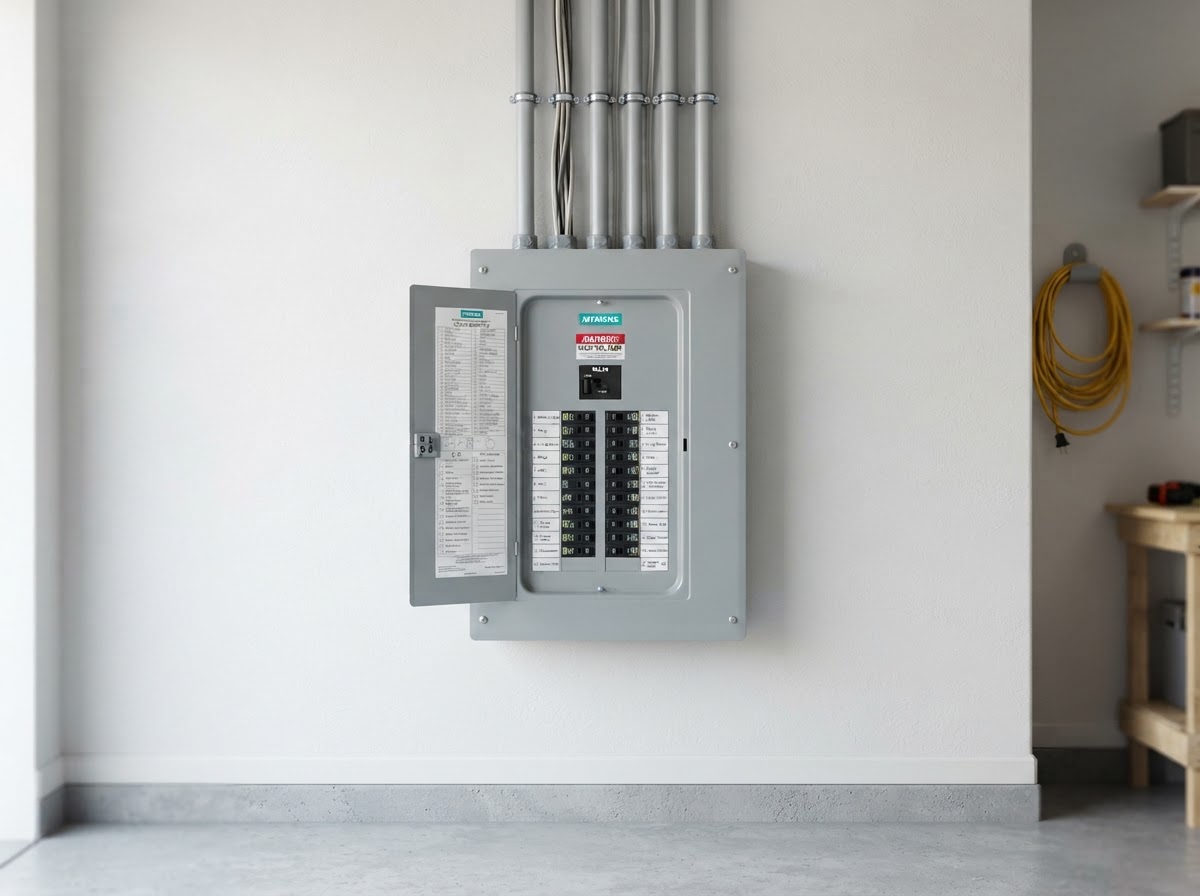
Closed modern residential electrical load center panel mounted on a clean garage wall with a neatly labeled circuit directory

Edinburg, TX

Electrical Panel Upgrades in Edinburg, TX

A panel assessment checks condition and demand — and the right next step is an assessment, not a replacement by default. 200 amp is one common example capacity, not a default recommendation or a quoted cost. We separate a panel-only replacement from a service-capacity upgrade, run a load calculation against what you actually run, and scope the work in writing. Tell us what you are adding and we will follow up to confirm details and availability.

This is a project inquiry, not a confirmed booking or electrical work contract. Call to confirm urgent availability.

Request a Panel Estimate

Tell us what you are adding and where. We'll follow up to confirm details and availability.

Optional text notifications

Consent is not a condition of any purchase. Carriers are not liable for delayed or undelivered messages. See our Privacy Policy and Terms & Conditions.

When should you call?

Condition and demand are two different questions

A panel that will not hold, a load center that is full, or a new appliance the existing service cannot support are all reasons to look at the panel — and the right next step depends on whether the question is condition or capacity. A panel in good condition is not a replacement job; a full panel is not always a service upgrade; and 200 amp is one example capacity, not a default answer. We assess the load center, the service entrance, and the connected loads before we recommend anything.

If you are seeing sparks, smoke, heat, or a burning smell from the panel, that is an immediate safety issue — move away from the equipment and call 911. For anything else, a written estimate after an on-site assessment is how we keep the work honest and the price tied to your actual project.

What does the service include?

Three kinds of panel work

Each block below is its own kind of panel project — and each starts with an assessment before any equipment is replaced. Not every panel needs a service upgrade, and not every full panel needs a replacement.

Closed modern residential electrical load center panel mounted on a clean garage wall with a neatly labeled circuit directory

Panel replacement for condition

A load center that will not hold, shows scorching or corrosion, or has a failed main disconnect is a condition problem — and the right next step is an assessment, not a condemnation by age alone. We look at the busbar, the breakers, the grounding and bonding, and the available spaces before we recommend replacing anything, because a panel in good condition does not need a swap.

We inspect the load center and the service entrance, test the breakers and the main disconnect, and check grounding and bonding before we quote a replacement. Where the condition warrants it, we scope a like-for-like panel replacement — compatible breakers, a correct circuit directory, and the same service capacity — rather than upselling capacity the home does not need.

A panel replaced because it actually failed the assessment, with the old and new equipment explained in writing — and the honest limit that a panel in good condition is not a replacement job.

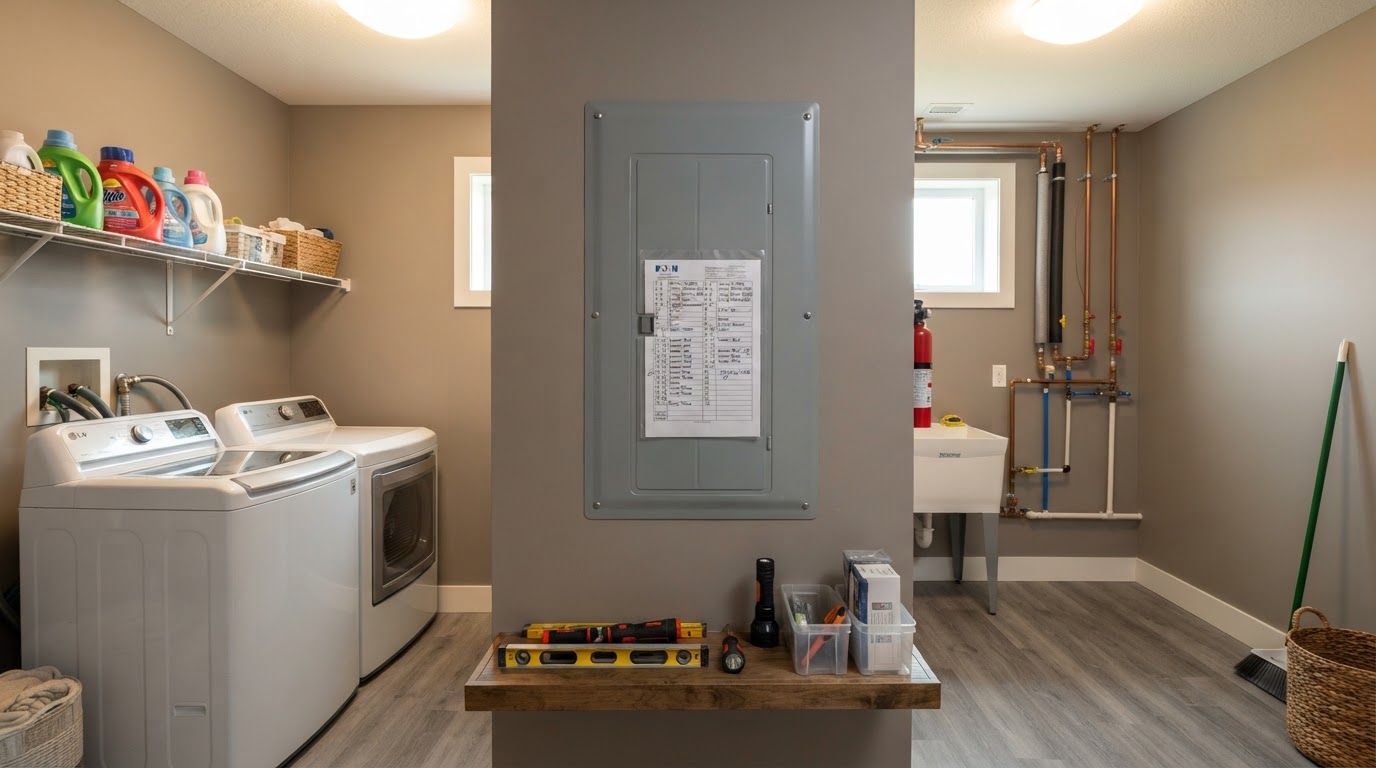
Finished residential utility room with a clean closed electrical panel and a labeled circuit directory under warm interior lighting

Capacity and service upgrades

Adding loads the existing service cannot support — a larger appliance, an EV charger, a backup generator, or a whole-home addition — can call for a capacity upgrade. 200 amp is one common example capacity, not a default recommendation or a quoted cost; the right size comes from a load calculation against what you actually run, not a guess.

We run a load calculation on the connected and planned loads, check the service entrance, meter enclosure, and feeder against that demand, and coordinate with the serving utility where the service size changes. The upgrade is scoped in writing with the panel, the feeder, the meter work, and the utility coordination as separate line items — so you see what is panel work and what is service work.

A service sized to your real load list with utility coordination planned up front, and the capacity question answered by calculation rather than by a default amp number — no automatic 200 amp upsell.

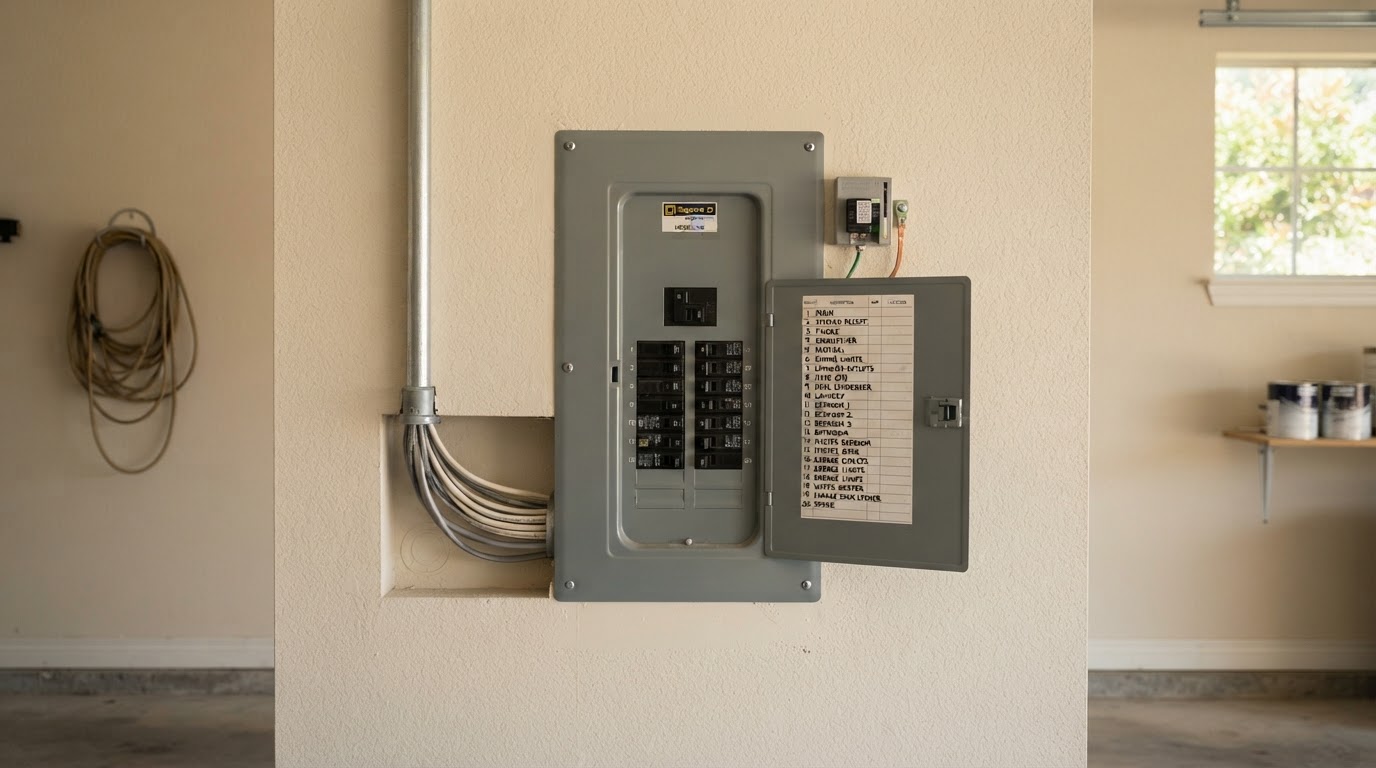
Neatly labeled circuit breakers and a clear circuit directory inside a residential load center panel

Breaker and circuit organization

A panel that works but is full, mislabeled, or loaded with incompatible breakers is an organization and compatibility problem — and it is a separate scope from a capacity upgrade. Available spaces, a correct circuit directory, and breakers listed for that panel are what keep the panel safe and serviceable.

We check available spaces against the loads you want to add, verify that every breaker is listed for that panel and busbar, and update the circuit directory so the panel is labeled correctly. Where a subpanel or a reorganization is the right answer, we scope that in writing rather than recommending a full service upgrade the home does not need.

A panel organized so the breakers fit, the directory is correct, and the available spaces match your plan — with organization scoped separately from any capacity work so you pay for what is needed.

What should a careful assessment cover?

Four things worth asking about

01

Documented diagnosis

Ask how the panel is assessed before a replacement is recommended — a panel in good condition is not a replacement job, and a full panel is not always a service upgrade. The documented assessment keeps the scope tied to the real condition.

02

Written scope

Ask for the panel, compatible breakers, feeder and meter work, grounding and bonding, access, permits, and finish restoration in writing before the work is scheduled — plus what is excluded — so the price follows the scope.

03

Compatible parts

Ask whether the breakers are listed for that panel and busbar and matched to the branch circuits — so the replacement holds under load and stays listed rather than creating the next fault.

04

Permit and inspection planning

Ask how permits, utility coordination, and a required inspection are handled where the work needs them, and how a contractor assessment differs from a municipal inspection — so the right step happens in the right order.

How does the work proceed?

From assessment to labeled panel

1

Assess equipment and demand

You share what is happening and what you want to add. We inspect the load center, the service entrance, and the connected loads, and confirm coverage and any diagnostic fee before booking.

2

Explain repair vs panel vs service upgrade

We separate a panel-only replacement from a capacity or service upgrade, and explain which one your project actually needs — with the honest limit that a panel in good condition is not a replacement job.

3

Written options and quote

You get a written estimate with the panel, compatible breakers, feeder and meter work where needed, grounding and bonding, access, permits, and finish work — plus what is excluded.

4

Permit, utility planning, and interruption

Where required, we plan permits and utility coordination as part of the scope, including any planned power interruption — scheduled with you rather than discovered mid-project.

5

Approved work

After you accept the quote, the agreed panel or service work is scheduled as a separate step. No work happens until you have approved the scope, and we do not promise same-day restoration.

6

Required inspection, functional checks, and labeling

We coordinate the required inspection where applicable, test under load, and update the circuit directory — with no guarantee of inspection approval or a restoration timeline we cannot make.

What affects cost?

What shapes the panel quote

Your panel estimate reflects the assessed scope, materials, and access — the drivers below shape it. A like-for-like panel replacement is a different scope from a service or capacity upgrade, and we separate the two in writing so you see which work is which.

Panel-only vs service work

A like-for-like panel replacement is a different scope from a service or capacity upgrade. We separate the two in the quote so a panel replacement does not quietly become a service upgrade, and you see which work is which.

Compatible breakers and equipment

Breakers listed for that panel and busbar, matched to the branch circuits — called out in the quote rather than assumed, so the replacement holds under load and stays listed.

Feeder and meter changes

Where a capacity upgrade changes the service size, the feeder, the meter enclosure, or the service entrance may need work — scoped as separate line items so the quote reflects the actual service work.

Grounding and bonding corrections

Grounding and bonding are checked as part of the assessment and corrected where the condition warrants — included or excluded in writing so the quote reflects what is safe, not a best case.

Access and clearance

Panel clearance, wall cavity, and the workspace around the load center shape the labor — assessed on site so the price reflects the actual conditions, not a best case that changes when we open it up.

Permit and utility coordination

Where the work requires it, permit fees and utility coordination are planned as part of the scope — including any planned interruption — rather than added after the work starts.

Finish restoration

Drywall, trim, and surface patching where the panel or feeder work passes through finished walls — stated as included or excluded so the quote reflects what the space looks like when we leave.

No price on this page is a binding commitment. Final price is set by the assessed written scope, provided after an on-site assessment — not a financing offer, discount, or automatic 200 amp upsell. The written quote also states what is excluded so you know what the scope does not cover.

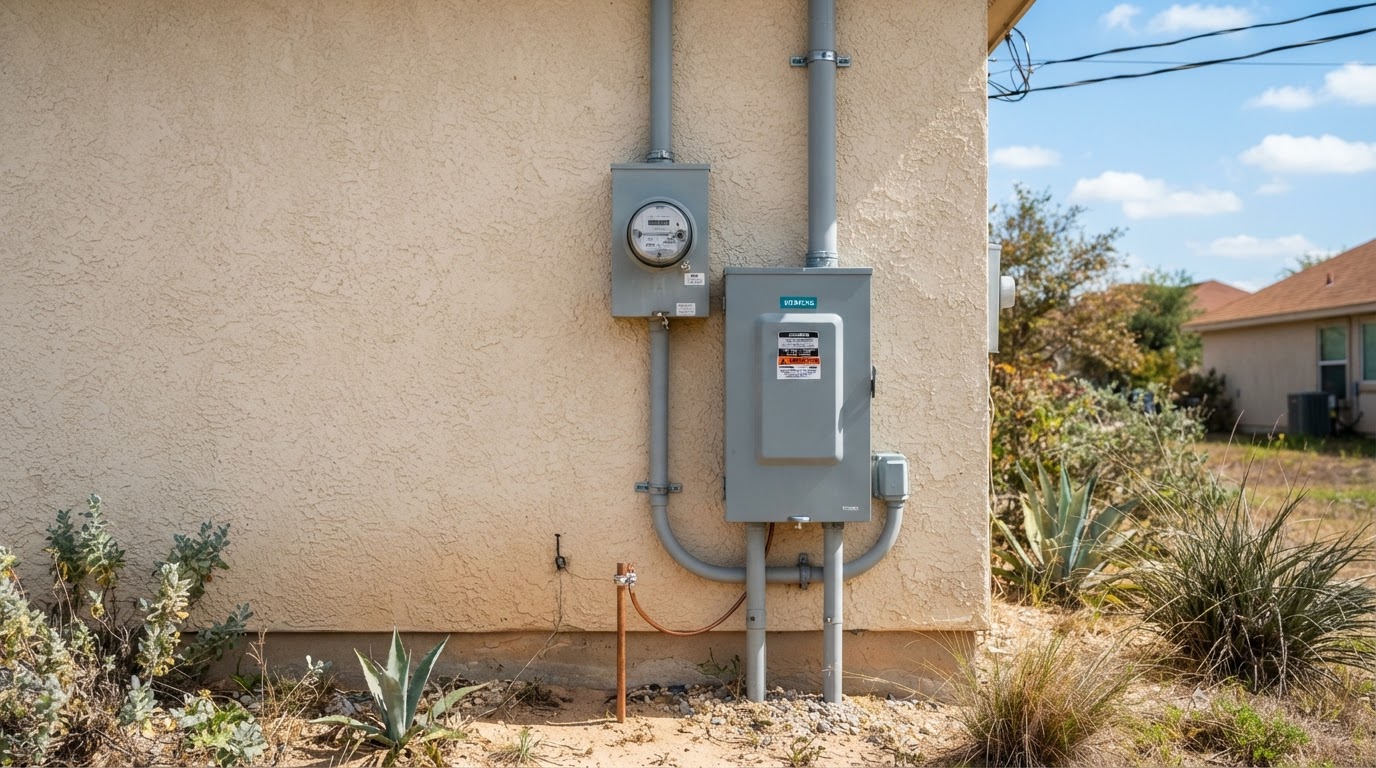
Tidy outdoor electrical service enclosure and meter base on the side of a South Texas stucco home with closed panels and no exposed conductors

Panel upgrade planning in Edinburg

Local context for your panel project

Edinburg sits in Hidalgo County along the US-281 and I-69C corridor, with the UTRGV campus and University Drive anchoring a lot of residential and small-commercial growth. Whether you are off Freddy Gonzalez or closer to the expressway, the planning steps are the same: assess the load center, confirm the service and the demand, and scope the work in writing.

Edinburg lists the 2023 NEC as the adopted code, and permit requirements vary by scope and jurisdiction — we plan permits, the required inspection, and utility coordination as part of the scope where the work needs them, including any planned power interruption. Property access and panel clearance shape the labor and the routing, so we look at access before we quote.

A contractor assessment is our on-site review to diagnose and scope the panel work; a municipal inspection is a separate step by the city's inspection authority, typically tied to a permit. They are different roles, and one does not replace the other.

Your panel questions answered

Frequently asked questions

Do I need a new panel?

+
Only if the assessment says so. A panel that will not hold, shows scorching or corrosion, or has a failed main disconnect may need replacement — but a panel in good condition does not. We inspect the load center, the breakers, and the grounding and bonding before we recommend anything, because the scope follows the real condition, not the age.

Is 200 amp always necessary?

+
No. 200 amp is one common example capacity, not a default recommendation or a quoted cost. The right size comes from a load calculation against what you actually run — and a home that does not need more service should not be upsold to it. We size the service to your real load list, not to a default number.

Is the meter included?

+
Sometimes, and only where the service size changes. A like-for-like panel replacement usually does not touch the meter enclosure; a capacity or service upgrade may involve the meter, the feeder, and the service entrance. We scope each as a separate line item and coordinate with the serving utility where the service changes — we do not assume all utility work is included.

Will power be off?

+
A panel or service upgrade requires a planned interruption — the work cannot be done live. We plan the interruption with you as part of the scope and coordinate with the utility where the service size changes, so the outage is scheduled rather than a surprise. We do not promise same-day restoration; utility approval and the actual scope determine the timeline.

Who handles permits?

+
Where the work requires a permit, we plan the permit and the required inspection as part of the scope. Edinburg lists the 2023 NEC, and permit requirements vary by scope and jurisdiction — we plan them rather than guessing which jobs need one. A municipal inspection is a separate step by the city's inspection authority; our contractor assessment is the on-site diagnosis and scope, and one does not replace the other.

Can every breaker fit every panel?

+
No. Breakers are listed for specific panels and busbars, and a breaker that fits the slot is not automatically compatible. We verify that every breaker is listed for your panel and matched to the branch circuit, so the replacement holds under load and stays listed — rather than creating a compatibility problem that shows up later.

What affects price?

+
Whether the work is panel-only or a service upgrade, compatible breakers, feeder and meter changes, grounding and bonding corrections, access and clearance, permit and utility coordination, and finish restoration. No price on this page is a binding commitment — final price is set by the assessed written scope, and your estimate reflects the scope, materials, and access.
Request a panel estimate

Tell us what you are adding

Share the equipment, the panel, and the project address. We will follow up to confirm details and availability, then assess on site and send a written estimate. This is a project inquiry, not a confirmed booking or electrical work contract — no work is scheduled until you accept the quote.

Request a Panel Estimate

Tell us what you are adding and where. We'll follow up to confirm details and availability.

Optional text notifications

Consent is not a condition of any purchase. Carriers are not liable for delayed or undelivered messages. See our Privacy Policy and Terms & Conditions.

Ready to start?

Choose your next step

Send the equipment and the project address, or call to talk it through first. We follow up by phone to confirm details and availability, then assess on site and send a written estimate — no work is scheduled until you accept the quote.

Request a Panel Estimate

Tell us what you are adding and where. We'll follow up to confirm details and availability.

Optional text notifications

Consent is not a condition of any purchase. Carriers are not liable for delayed or undelivered messages. See our Privacy Policy and Terms & Conditions.