Draft preview — not published. Call (956) 303-2209 to confirm availability.

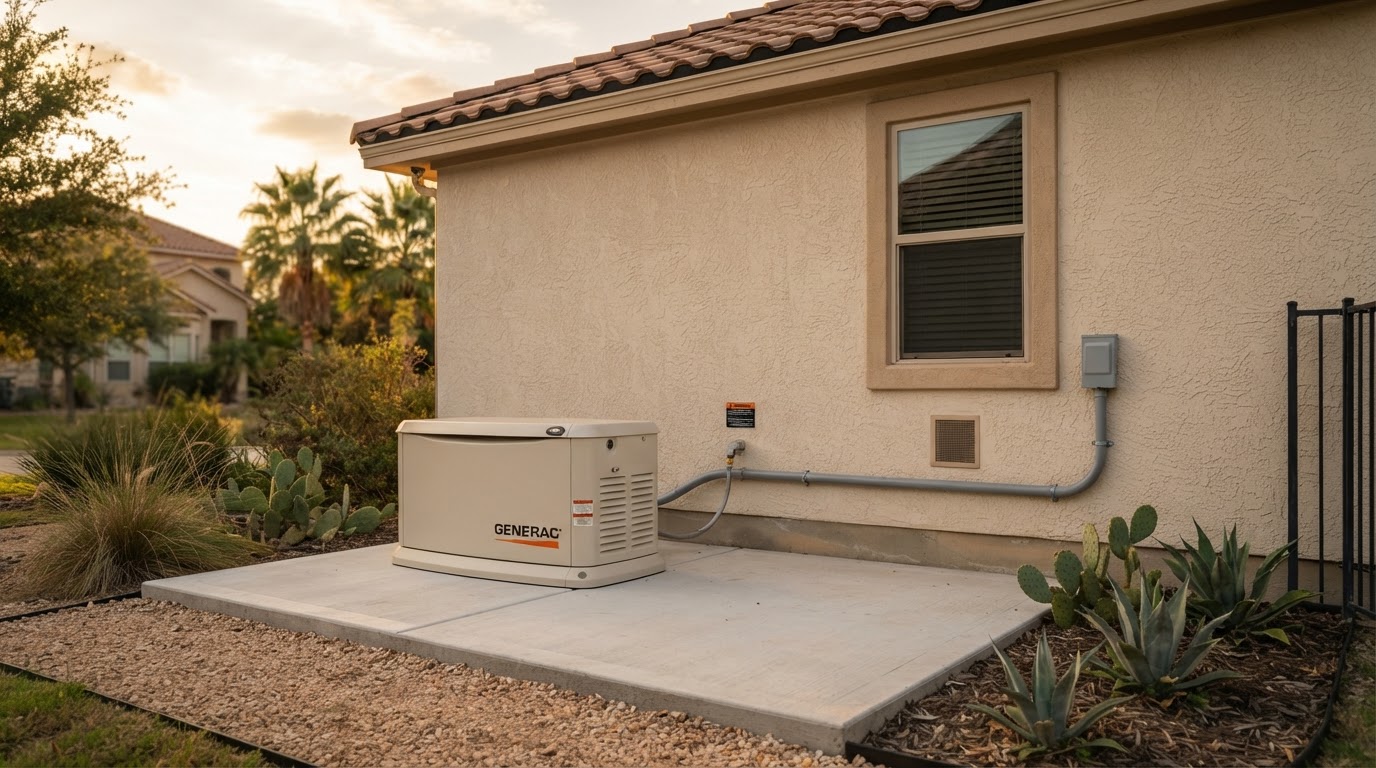
Outdoor standby generator enclosure separated from building openings on a clean residential exterior pad with tidy conduit and no exposed wiring

Edinburg, TX

Generator Installation Planning in Edinburg, TX

Backup power starts with the essential-load list — what you actually need to keep running — not a whole-house assumption. We size the generator to that list and the starting load, select transfer equipment to prevent backfeeding, and coordinate the site, the utility, and the fuel work handled by the appropriate trade. Tell us what you want to back up and we will follow up to confirm details and availability.

This is a project inquiry, not a confirmed booking or electrical work contract. Call to confirm urgent availability.

Request a Generator Planning Estimate

Tell us what you want to back up and where. We'll follow up to confirm details and availability.

Optional text notifications

Consent is not a condition of any purchase. Carriers are not liable for delayed or undelivered messages. See our Privacy Policy and Terms & Conditions.

When should you call?

Backup power is a plan, not a guess

A generator that does not start what you need, a transfer setup that backfeeds the utility, or a site that does not clear the exhaust are all reasons to plan before you install. The generator has to cover the starting load of the essential appliances, the transfer equipment has to isolate the utility, and the fuel work has to be handled by the appropriate trade — not every appliance can run automatically, and a whole-house number is not the default.

If you are seeing sparks, smoke, heat, or a burning smell, that is an immediate safety issue — move away from the equipment and call 911. For anything else, a written estimate after an on-site assessment is how we keep the plan honest and the price tied to your actual project.

What does the service include?

Three parts of generator planning

Each block below is its own part of the plan — and each starts with the loads, the equipment, and the site assessed before any work is quoted. Not every appliance can run automatically, and a portable generator belongs outdoors, never indoors.

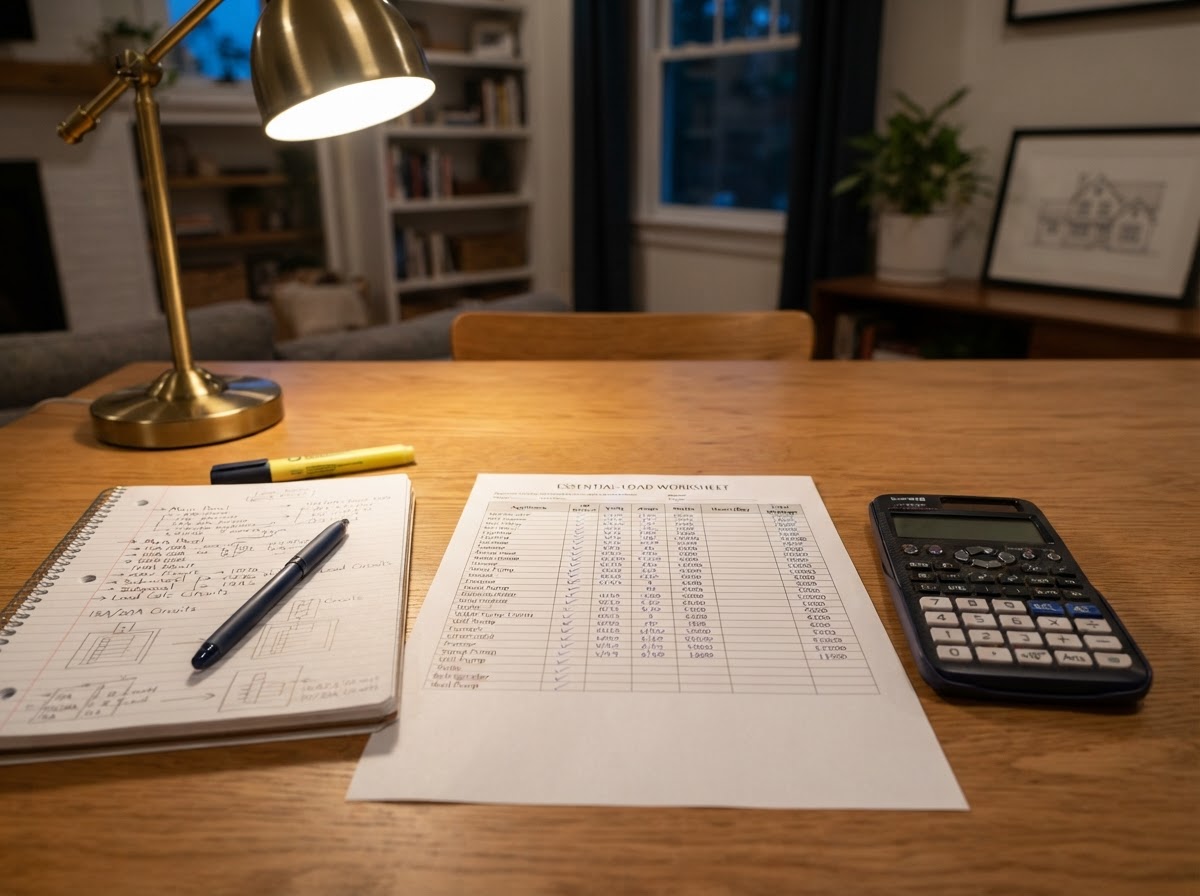
Clean tabletop with a printed essential-load worksheet, a calculator, and notes for home backup generator planning under warm desk lighting

Essential-load planning

Backup power starts with a list of what you actually need to keep running — the essential circuits, like refrigeration, lighting, a well or HVAC, and medical equipment — not a whole-house assumption. The generator kilowatt rating has to cover the starting load of those appliances, not just the running load, and not every appliance can or should run automatically.

We build the essential-load list with you, account for the starting load of motors and compressors, and size the generator to that list rather than to a whole-house number. The scope separates what the generator backs up from what it does not, so you know which loads are covered and which are not — and the plan is honest about what a portable, a partial standby, or a larger standby can and cannot start.

A generator sized to your real essential-load list, with the covered and uncovered loads called out in writing — and the honest limit that not every appliance can run automatically, and that a whole-house promise is not the default.

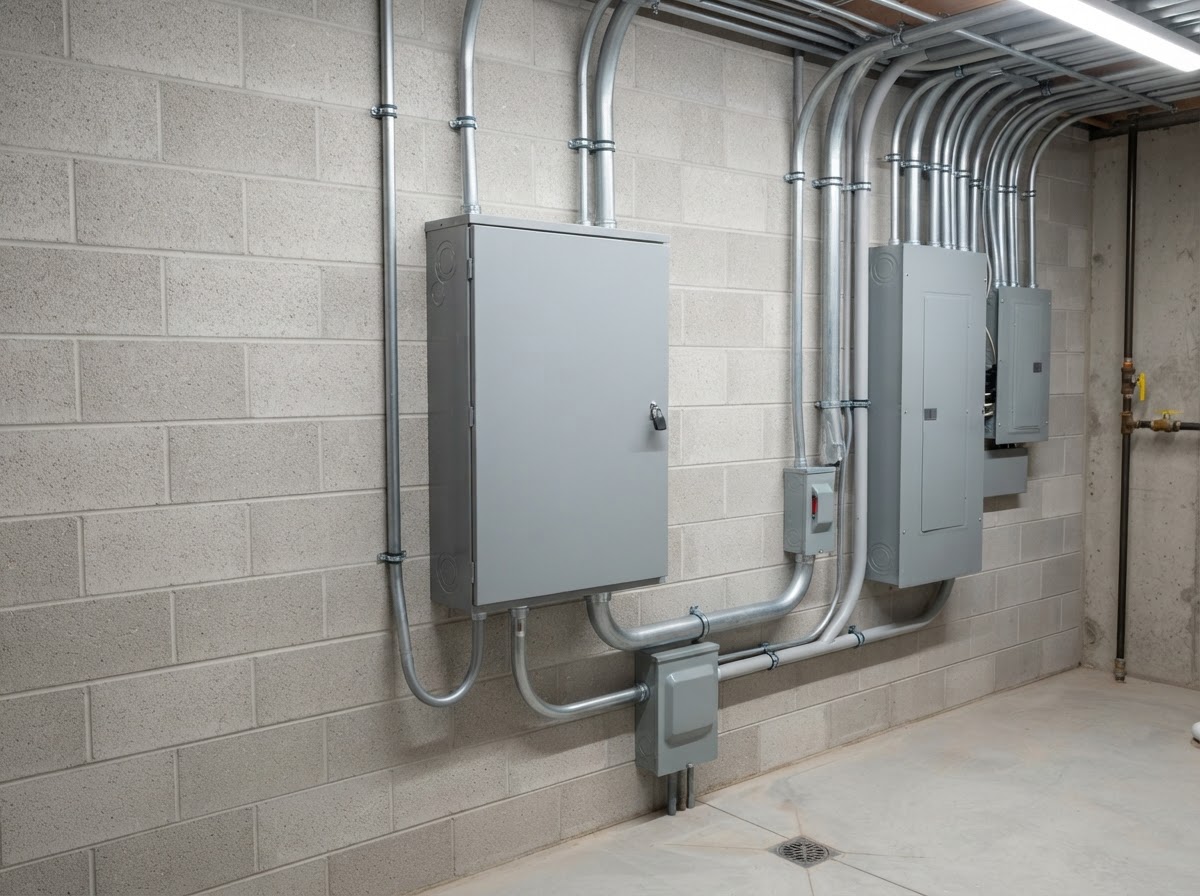
Closed gray automatic transfer switch enclosure mounted on a clean utility wall next to a residential electrical service area with tidy conduit and no exposed live wiring

Transfer-equipment selection

A generator needs transfer equipment to connect it to the building wiring safely — an automatic transfer switch for a standby unit, or a manual transfer switch or inlet for a portable — and the equipment has to prevent backfeeding the utility. The transfer equipment is what isolates your generator from the serving utility, and it is not optional.

We select the transfer equipment to the generator and the service rating, plan the utility isolation and the grounding, and coordinate the connection so the generator feeds the essential loads without backfeeding the street. We do not describe a connection procedure for you to perform — the transfer equipment is installed by qualified professionals, and the scope separates the electrical work from any fuel work handled by the appropriate trade.

Transfer equipment selected to prevent backfeeding and installed to isolate the utility, with the electrical scope separated from any fuel work — and the honest limit that a generator without transfer equipment is not a safe backup, however it is connected.

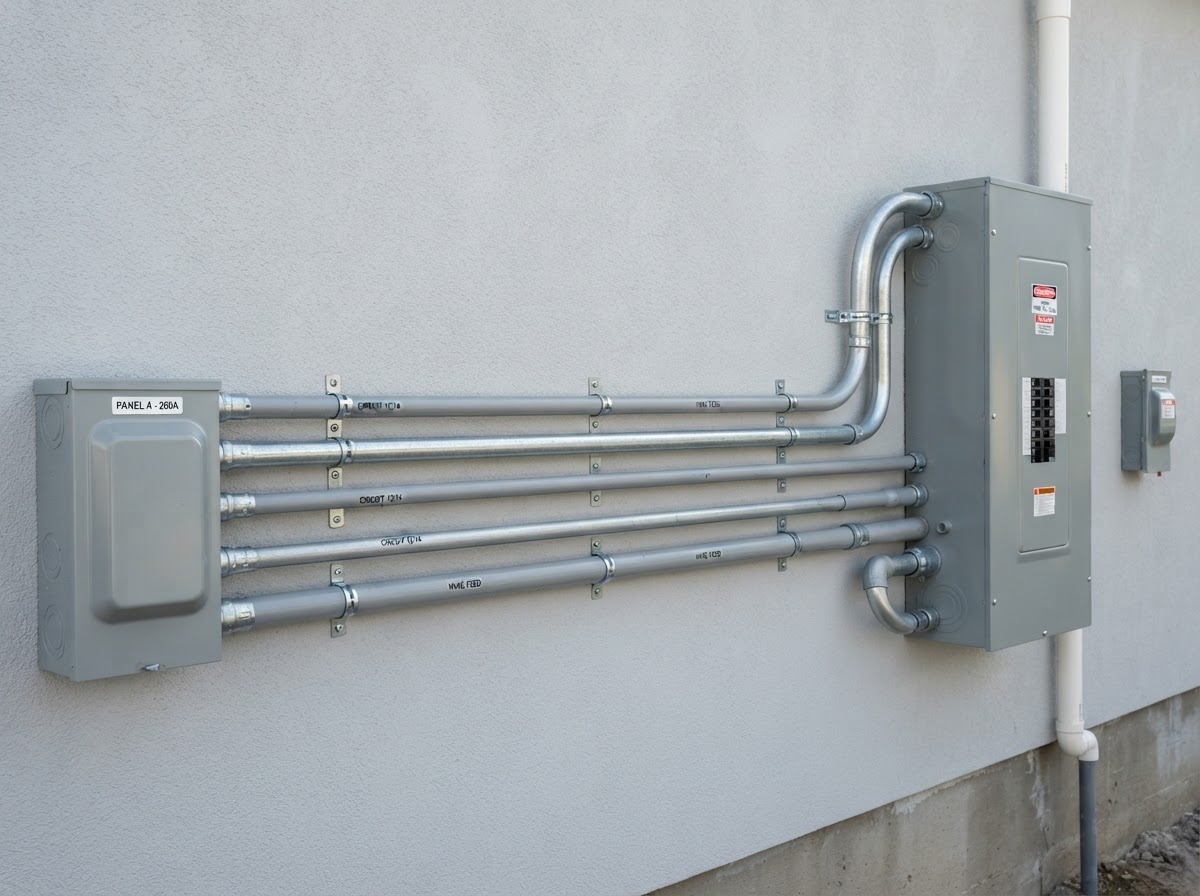
Tidy enclosed electrical conduit run along a residential exterior wall representing finished exterior service-area electrical work

Site, utility, and fuel coordination

Where the generator sits, how it vents, and how it ties into the fuel supply and the service equipment all shape the project — and the site clearance and exhaust have to follow the manufacturer instructions. A standby generator needs a pad, clearance from openings and intakes, and coordination with the serving utility; a portable generator stays outdoors, far from doors and windows, never indoors or in a garage.

We plan the site clearance and the exhaust per the manufacturer instructions, coordinate the utility connection and any permit where the service or the fuel work requires it, and scope the electrical distance from the generator to the transfer equipment. Fuel connections are handled by the appropriate qualified trade — we do not claim gas-fitting capability we have not verified — and the scope states which work is ours and which is a separate trade.

A generator site planned for clearance, exhaust, and utility coordination, with the electrical scope separated from the fuel work — and the honest limit that a portable generator belongs outdoors, far from openings, never indoors.

What should a careful assessment cover?

Four things worth asking about

01

Documented assessment

Ask how the essential-load list and the starting load are built before the generator is sized — a whole-house number is not the default, and not every appliance can run automatically. The documented assessment keeps the generator tied to your real load list.

02

Written scope

Ask for the generator, the transfer equipment, the site work, the fuel work as a separate trade, permits, and commissioning in writing before the install is scheduled — plus what is excluded — so the price follows the scope.

03

Compatible equipment

Ask whether the generator, the transfer equipment, and the service rating are matched to the essential loads — so the system starts what it is supposed to, rather than stalling on the first compressor.

04

Permit and trade coordination

Ask how permits, utility coordination, and the fuel work by the appropriate trade are handled, and how a contractor assessment differs from a municipal inspection — so the right step happens in the right order and the right trade does the right work.

How does the work proceed?

From essential loads to commissioning

1

Assess essential loads and system

You share what you want to keep running and the project address. We build the essential-load list, account for starting load, and confirm coverage and any diagnostic fee before booking.

2

Site, fuel, and transfer planning

On site, we plan the generator size, the transfer equipment, the site clearance and exhaust, the utility isolation, and the fuel scope handled by the appropriate trade — before any work is quoted.

3

Written scope and separate trade responsibilities

You get a written estimate with the electrical work, the transfer equipment, the site work, the fuel work as a separate trade, permits, and commissioning — plus what is excluded — so you can compare and decide.

4

Permits and coordination

Where required, we plan permits and utility coordination as part of the scope before the work starts — including any coordination with the fuel trade — rather than as a surprise after.

5

Approved work

After you accept the quote, the electrical and transfer work is scheduled as a separate step. No work happens until you have approved the scope, and we do not promise uninterrupted power or no maintenance.

6

Commissioning and operating-document handoff

We commission the system, walk you through the operation, and hand off the operating documents — with no guarantee of uninterrupted power or a maintenance schedule we cannot set for you.

What affects cost?

What shapes the generator quote

Your generator estimate reflects the assessed scope, materials, and access — the drivers below shape it. The electrical and transfer work is ours; the fuel work is a separate trade, and the quote clarifies what is included, what is excluded, the maintenance expectation, and any third-party costs.

Generator size

The kilowatt rating sized to your essential-load list and the starting load of the covered appliances — not a whole-house number. The generator is matched to what you actually need to back up, called out in the quote.

Transfer equipment

An automatic transfer switch, a manual transfer switch, or an inlet for a portable — selected to the generator and the service rating, and installed to prevent backfeeding the utility.

Electrical distance

The run from the generator to the transfer equipment and the service — the length and the routing shape the conductor and the labor, assessed on site so the price reflects the actual route.

Base and site work

A pad, clearance from openings and intakes, and exhaust routing per the manufacturer instructions — scoped as part of the site work rather than assumed, so the generator sits where it should.

Fuel work by the appropriate trade

Fuel connections — gas, propane, or diesel — are handled by the appropriate qualified trade, not assumed into the electrical scope. The quote states which work is ours and which is a separate trade.

Permits and commissioning

Where the service, the fuel, or the installation requires it, permit fees and commissioning are planned as part of the scope — including the operating-document handoff — rather than added after.

No price on this page is a binding commitment. Final price is set by the assessed written scope, provided after an on-site assessment — not an installed-price figure, and no whole-house capacity, uninterrupted-power, or maintenance-free promise.

Closed gray automatic transfer switch enclosure mounted on a clean utility wall next to a residential electrical service area with tidy conduit and no exposed live wiring

Planning generator work in Edinburg

Local context for your generator project

Edinburg sits in Hidalgo County along the US-281 and I-69C corridor, with the UTRGV campus and University Drive anchoring a lot of residential and small-commercial growth. Whether you are off Freddy Gonzalez or closer to the expressway, the planning steps are the same: build the essential-load list, plan the site and the transfer equipment, and coordinate the utility and the fuel trade.

Edinburg lists the 2023 NEC as the adopted code, and permit requirements vary by scope and jurisdiction — we plan permits, utility coordination, and the fuel work by the appropriate trade as part of the scope where the work needs them. Site access, clearance from openings and intakes, and the manufacturer clearances shape the installation, so we look at the site before we quote.

A contractor assessment is our on-site review to scope the generator plan; a municipal inspection is a separate step by the city's inspection authority, typically tied to a permit. They are different roles, and one does not replace the other — and the fuel work is the appropriate trade's, not ours to claim.

Your generator questions answered

Frequently asked questions

Which loads can be backed up?

+
The loads on your essential-load list — refrigeration, lighting, HVAC or a well, and medical equipment — sized to the generator's kilowatt rating and the starting load of those appliances. We build the list with you and separate what the generator backs up from what it does not, because not every load in the house can or should run automatically.

Is transfer equipment needed?

+
Yes. A generator needs transfer equipment — an automatic transfer switch for a standby unit, or a manual transfer switch or inlet for a portable — to connect to the building wiring safely and to prevent backfeeding the utility. It is not optional, and it is installed by qualified professionals, not a procedure for you to perform.

Will every appliance run?

+
Not necessarily. Motors and compressors have a starting load that can exceed the running load, and the generator has to cover that inrush. We account for starting load in the essential-load plan and scope which loads are covered — because a whole-house promise is not the default, and not every appliance can start at once.

Who handles fuel connections?

+
Fuel connections — gas, propane, or diesel — are handled by the appropriate qualified trade. We do not claim gas-fitting capability we have not verified. The electrical and transfer work is ours; the fuel work is a separate trade, and the written scope states which is which so you know who is responsible for what.

Where can it be located?

+
A standby generator needs a pad, clearance from openings and intakes, and exhaust routing per the manufacturer instructions, coordinated with the serving utility. A portable generator stays outdoors, far from doors and windows — never indoors or in a garage. We plan the site clearance and the exhaust before the work is quoted.

Does a portable generator belong indoors?

+
Never. A portable generator runs outdoors, far from doors, windows, and intakes — never indoors or in a garage, because of carbon monoxide. We do not describe a connection procedure for you to perform; the transfer equipment and the inlet are installed by qualified professionals, and a portable stays outside.

What affects installed cost?

+
Generator size, transfer equipment, the electrical distance from the generator to the service, base and site work, fuel work by the appropriate trade, permits, and commissioning. No price on this page is a binding commitment — final price is set by the assessed written scope, and your estimate reflects the scope, materials, and access.
Request a generator planning estimate

Tell us what you want to back up

Share the essential loads, the site, and the project address. We will follow up to confirm details and availability, then assess on site and send a written estimate. This is a project inquiry, not a confirmed booking or electrical work contract — no work is scheduled until you accept the quote.

Request a Generator Planning Estimate

Tell us what you want to back up and where. We'll follow up to confirm details and availability.

Optional text notifications

Consent is not a condition of any purchase. Carriers are not liable for delayed or undelivered messages. See our Privacy Policy and Terms & Conditions.

Ready to start?

Choose your next step

Send the essential loads and the project address, or call to talk it through first. We follow up by phone to confirm details and availability, then assess on site and send a written estimate — no work is scheduled until you accept the quote.

Request a Generator Planning Estimate

Tell us what you want to back up and where. We'll follow up to confirm details and availability.

Optional text notifications

Consent is not a condition of any purchase. Carriers are not liable for delayed or undelivered messages. See our Privacy Policy and Terms & Conditions.