Draft preview — not published. Call (956) 303-2209 to confirm availability.

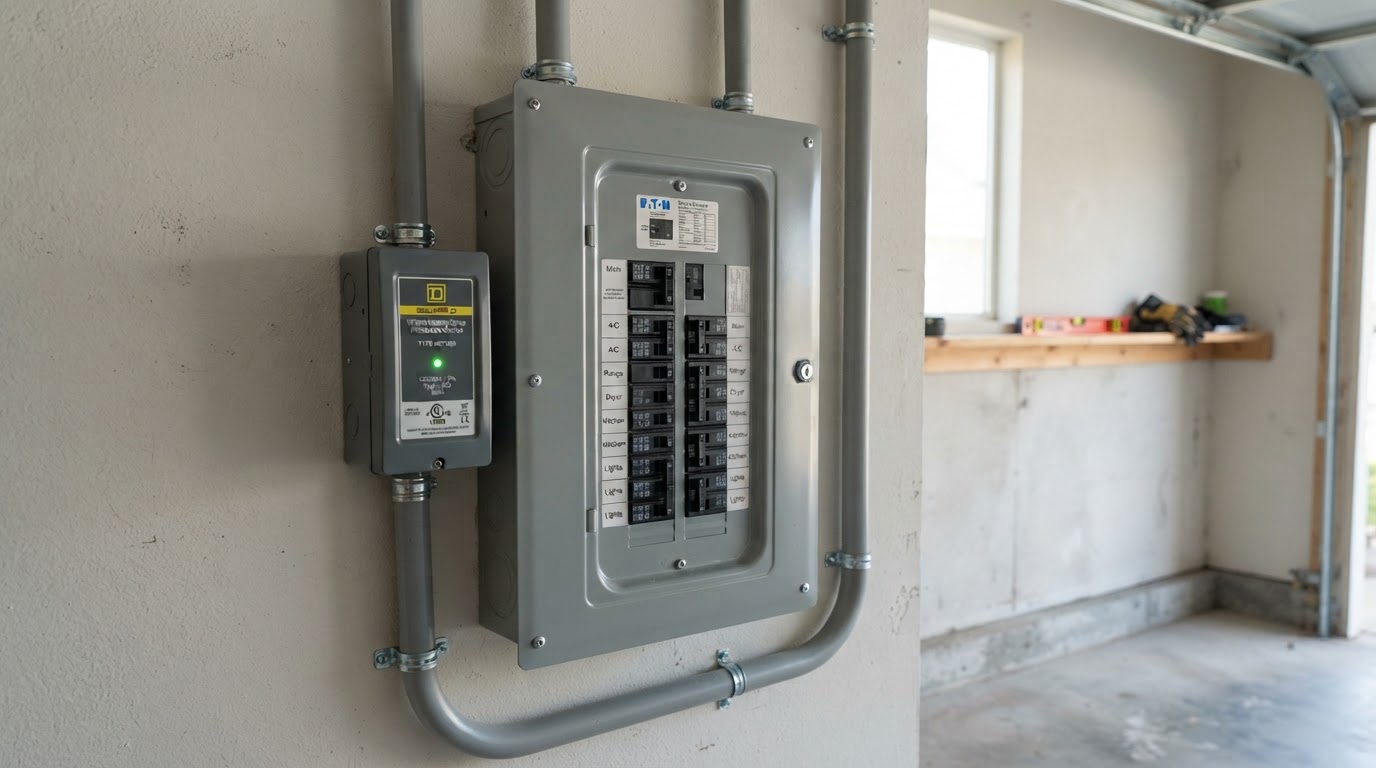
Installed whole-house surge protective device mounted at a residential service panel with a visible status indicator on a clean exterior wall

Edinburg, TX

Whole-Home Surge Protection in Edinburg, TX

A surge protective device reduces transient-voltage surge risk — it does not supply backup power or guarantee protection against every lightning event. We assess the service equipment and the grounding and bonding, select a listed SPD rated for your service, and install it per the manufacturer instructions. Tell us what you want to protect and we will follow up to confirm details and availability.

This is a project inquiry, not a confirmed booking or electrical work contract. Call to confirm urgent availability.

Request a Surge Protection Estimate

Tell us what you want to protect and where. We'll follow up to confirm details and availability.

Optional text notifications

Consent is not a condition of any purchase. Carriers are not liable for delayed or undelivered messages. See our Privacy Policy and Terms & Conditions.

When should you call?

An SPD reduces risk — it is not backup power

Sensitive electronics, a service panel you want to protect, or a home in an area with frequent storms are all reasons to look at surge protection — and the right next step is a device matched to the service and the grounding, not a power strip bolted to a panel. An SPD reduces transient-voltage surge risk; it does not supply backup power or guarantee protection against every lightning event. We assess the service equipment and the grounding and bonding before we select the device.

If you are seeing sparks, smoke, heat, or a burning smell, that is an immediate safety issue — move away from the equipment and call 911. For anything else, a written estimate after an on-site assessment is how we keep the install honest and the price tied to your actual project.

What does the service include?

Three parts of surge protection

Each block below is its own part of the plan — and each starts with the service and the grounding assessed before any device is selected. An SPD reduces transient-surge risk; it does not supply backup power or guarantee protection against every lightning event.

Installed whole-house surge protective device mounted at a residential service panel with a visible status indicator on a clean exterior wall

System-level SPD assessment and selection

A whole-home surge protective device (SPD) is installed at the service equipment to reduce transient-voltage surges that enter from the utility or from inside the home. The device has a voltage rating and a protection rating matched to the service, and a Type 1 or Type 2 application depending on where it connects — the selection follows the equipment and the manufacturer instructions, not a guess.

We assess the service equipment and the grounding and bonding, select a listed SPD rated for the service voltage and the application, and plan the installation at the load side or the service equipment per the manufacturer instructions. The device is matched to the equipment it protects — not assumed to fit every panel — and we distinguish a system-level SPD from a point-of-use device before we recommend one.

A system-level SPD selected for your service and installed per the manufacturer instructions, with the grounding and bonding checked — and the honest limit that an SPD reduces transient-surge risk, it does not guarantee protection against every lightning event.
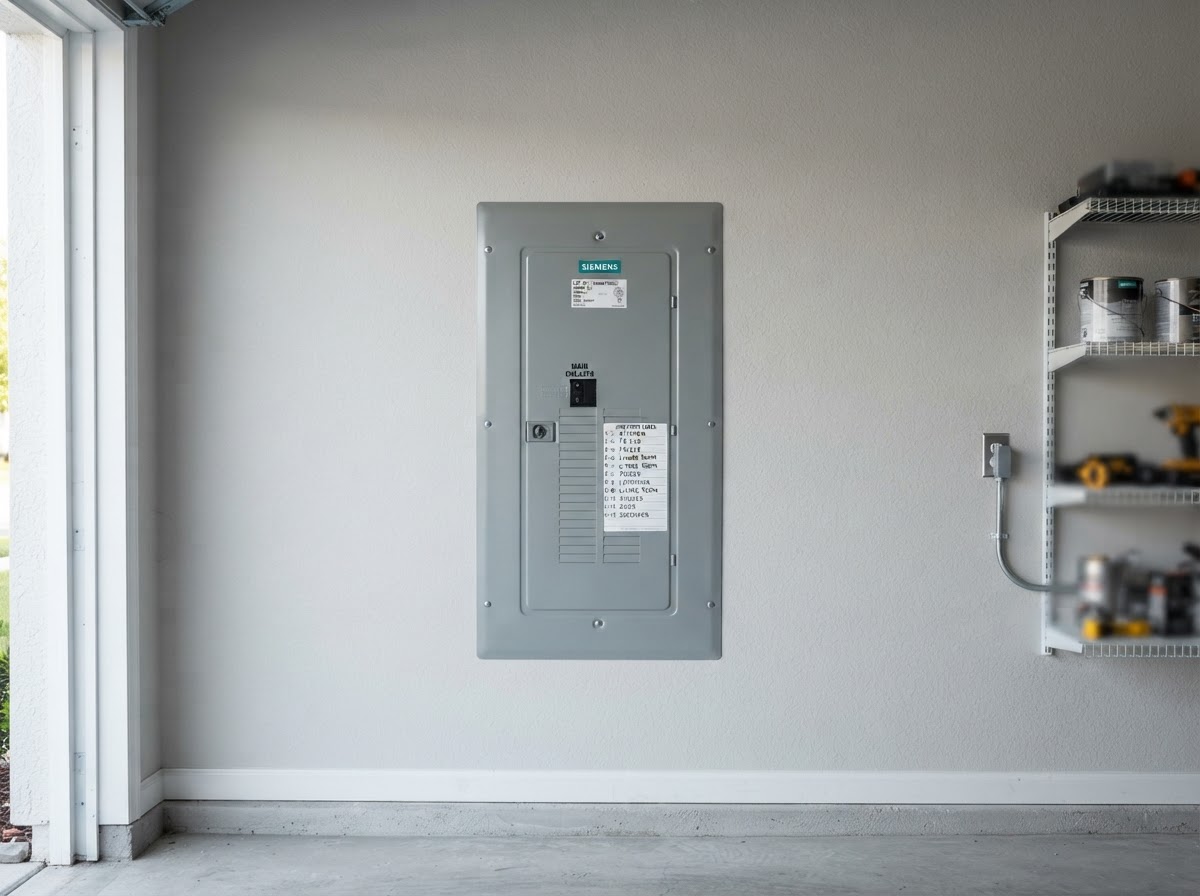

Closed residential electrical service equipment and load center panel on a clean wall with no exposed live wiring

Grounding and installation context

An SPD only works as well as the grounding and bonding it connects to — the surge needs a path to ground, and a service with weak grounding does not get the full benefit. The installation has to tie the device to the service equipment and the grounding electrode system, and the existing grounding has to be checked, not assumed.

We inspect the grounding and bonding at the service equipment, verify the grounding electrode system, and install the SPD to the manufacturer instructions with the connection to the service and the ground. Where the grounding needs correction for the device to work, that work is scoped in writing first — so the SPD has a real path to ground rather than a device bolted to a panel with no ground to speak of.

An SPD installed on grounding and bonding that actually supports it, with any corrective work called out in writing — and the honest limit that a device on weak grounding is not the protection the rating promises.

Tidy home office desk with a computer, monitor, router, and small electronics plugged into a quality surge protector under warm interior lighting

Status, maintenance, and layered protection

A surge protective device has a protection status indicator and a finite service life — surges wear the protective components down, and a device that has taken enough surges may need replacement. Layered protection pairs a system-level SPD at the service with point-of-use protection at sensitive electronics, because no single device covers every path a surge can take.

We explain the status indicator and what it means for replacement, plan a layered approach where the system-level SPD and point-of-use devices work together, and document the maintenance expectation in the scope. We do not claim a single device prevents every surge or that an SPD supplies backup power — it reduces transient-surge risk, and the status indicator tells you when the device has done its job.

A layered surge plan with the status indicator and the maintenance expectation explained, and point-of-use protection where the sensitive loads sit — and the honest limit that an SPD does not supply backup power or guarantee protection against every lightning event.

What should a careful assessment cover?

Four things worth asking about

01

Documented assessment

Ask how the service equipment and the grounding and bonding are assessed before an SPD is selected — a device on weak grounding is not the protection the rating promises. The documented assessment keeps the device tied to your real service.

02

Written scope

Ask for the device, the grounding corrections, the point-of-use protection, access, and permits in writing before the install is scheduled — plus what is excluded — so the price follows the scope and you can compare bids.

03

Compatible equipment

Ask whether the SPD is listed for the service voltage and the application and matched to the equipment it protects — so the device does its job rather than sitting on a panel it was not rated for.

04

Permit and inspection planning

Ask how permits and a final inspection are handled where the installation requires them, and how a contractor assessment differs from a municipal inspection — so the right step happens in the right order.

How does the work proceed?

From assessment to status explanation

1

Assess system and sensitive loads

You share what you want to protect and the project address. We assess the service equipment, the grounding and bonding, and the sensitive loads, and confirm coverage and any diagnostic fee before booking.

2

Select compatible listed device

On site, we select a listed SPD rated for the service voltage and the application, plan the installation at the service equipment, and decide where point-of-use protection fits the sensitive loads.

3

Written quote

You get a written estimate with the device, the grounding and bonding corrections where needed, the point-of-use protection, access, and permits where required — plus what is excluded — so you can compare and decide.

4

Qualified installation

After you accept the quote, the SPD is installed by qualified professionals to the manufacturer instructions — no how-to steps here, and no work until you have approved the scope.

5

Status and limitations explanation

We explain the status indicator, what it means for replacement, and the limits of the protection — with no guarantee of protection against every lightning event or a backup-power claim we cannot make.

What affects cost?

What shapes the surge protection quote

Your surge protection estimate reflects the assessed scope, materials, and access — the drivers below shape it. We do not offer an equipment-replacement warranty or a universal protection promise — the device reduces transient-surge risk, and the quote states what it does and does not cover.

Device selection

A listed SPD rated for the service voltage and the application — Type 1 or Type 2 — selected to the equipment and the manufacturer instructions, not a guess at what fits.

Equipment compatibility and access

Whether the SPD fits the service equipment and the panel, and how the access to the service shapes the labor — assessed on site so the device is installed where it should be, not where it is easiest.

Grounding and bonding corrections

Where the existing grounding needs correction for the SPD to work, that work is scoped in writing first — because a device on weak grounding is not the protection the rating promises.

Point-of-use protection

Where sensitive electronics need it, point-of-use devices are planned as part of a layered approach — called out in the quote rather than assumed into one number.

Permit scope

Where the installation requires a permit, the fee is planned as part of the scope — Edinburg lists the 2023 NEC, and permit requirements vary by scope and jurisdiction, so we plan rather than guess.

No equipment-replacement warranty

We do not offer a false equipment-replacement warranty or a universal protection promise. The SPD reduces transient-surge risk; your written quote explains the selected device, installation scope and limits.

No price on this page is a binding commitment. Final price is set by the assessed written scope, provided after an on-site assessment — there is no equipment-replacement warranty, no single price figure, and no universal protection promise.

Tidy home office desk with a computer, monitor, router, and small electronics plugged into a quality surge protector under warm interior lighting

Planning surge protection work in Edinburg

Local context for your surge project

Edinburg sits in Hidalgo County along the US-281 and I-69C corridor, with the UTRGV campus and University Drive anchoring a lot of residential and small-commercial growth. Whether you are off Freddy Gonzalez or closer to the expressway, the planning steps are the same: assess the service equipment and the grounding, select a listed SPD rated for the service, and scope the install in writing.

Edinburg lists the 2023 NEC as the adopted code, and permit requirements vary by scope and jurisdiction — we plan permits where required rather than guessing which jobs need one. We assess the existing equipment and the access up front, and we do not claim every storm destroys devices or that an SPD supplies backup power.

A contractor assessment is our on-site review to scope the surge protection; a municipal inspection is a separate step by the city's inspection authority, typically tied to a permit. They are different roles, and one does not replace the other.

Your surge protection questions answered

Frequently asked questions

Does an SPD stop outages?

+
No. A surge protective device reduces transient-voltage surge risk — it does not supply backup power or stop a utility outage. If you lose power, that is an outage, not a surge the device can prevent. For backup power, see Generator Installation; for outage cause, contact your serving utility.

Is it the same as a power strip?

+
No. A whole-home SPD is installed at the service equipment to reduce surges that enter from the utility or inside the home; a power strip is a point-of-use device at one outlet. They work together in a layered approach — a system-level SPD at the service and point-of-use protection at sensitive electronics — and neither is a substitute for the other.

Will it stop every lightning event?

+
No. An SPD reduces transient-surge risk; it does not guarantee protection against every lightning event or every surge. A direct lightning strike can exceed what any device can handle. We explain the limits in the scope and plan a layered approach, with no universal protection promise — the device does what the rating supports, not more.

How is a device selected?

+
By the service voltage, the application (Type 1 or Type 2), and the manufacturer instructions — matched to the equipment it protects and the grounding it connects to. We assess the service equipment and the grounding and bonding first, then select a listed SPD rated for your service, rather than guessing at what fits.

Can status indicators show replacement need?

+
Yes — many SPDs have a protection status indicator that shows when the protective components have worn down from repeated surges. We explain what the indicator means and the maintenance expectation in the scope, so you know when the device has done its job and may need replacement — with no false equipment-replacement warranty.

What affects price?

+
Device selection, equipment compatibility and access, any grounding and bonding corrections, point-of-use protection, and permit scope. No price on this page is a binding commitment — final price is set by the assessed written scope, and your estimate reflects the scope, materials, and access.

Request a surge protection estimate

Tell us what you want to protect

Share the service, the sensitive loads, and the project address. We will follow up to confirm details and availability, then assess on site and send a written estimate. This is a project inquiry, not a confirmed booking or electrical work contract — no work is scheduled until you accept the quote.

Request a Surge Protection Estimate

Tell us what you want to protect and where. We'll follow up to confirm details and availability.

Optional text notifications

Consent is not a condition of any purchase. Carriers are not liable for delayed or undelivered messages. See our Privacy Policy and Terms & Conditions.

Ready to start?

Choose your next step

Send the service and the project address, or call to talk it through first. We follow up by phone to confirm details and availability, then assess on site and send a written estimate — no work is scheduled until you accept the quote.

Request a Surge Protection Estimate

Tell us what you want to protect and where. We'll follow up to confirm details and availability.

Optional text notifications

Consent is not a condition of any purchase. Carriers are not liable for delayed or undelivered messages. See our Privacy Policy and Terms & Conditions.